
Bankruptcy Auto Leads: Can You Finance Buyers After Bankruptcy?
Autocarleads | Updated April 2026 | 8 min read
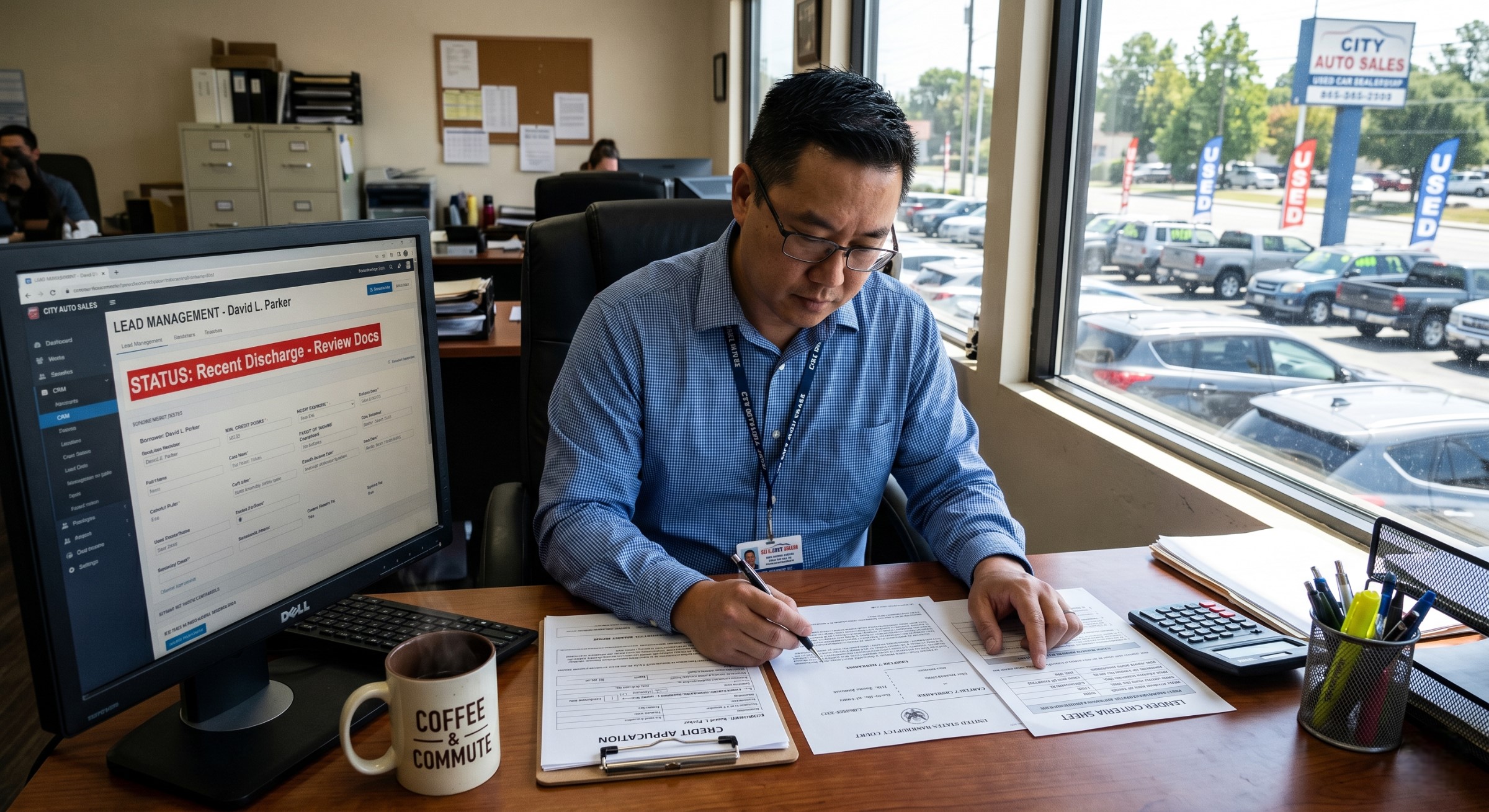
A bankruptcy lead lands in your CRM. Your finance manager glances at it, sees the bankruptcy flag, and either treats it like a real opportunity or moves on to the next lead.
Which one of those happens at your dealership says a lot about how much money you’re leaving on the table every month.
Bankruptcy buyers are one of the most consistently profitable segments in subprime, and most dealers don’t work them hard enough.
They assume the buyer can’t get approved, or they don’t know which lenders to route to, or they’ve been burned once and decided the segment isn’t worth it.
Meanwhile the dealers who do figure out post-bankruptcy auto financing are closing these deals at strong margins with buyers who tend to be loyal, grateful, and on-time with payments.
Here’s how the segment actually works, and how to set up your operation to close more of it.
The myth that bankruptcy buyers can’t get financed
The biggest misconception about bankruptcy in subprime is that it’s a hard stop. It isn’t.
Hundreds of thousands of Americans file for bankruptcy every year, and most of them eventually need a car. The lenders who specialize in this segment know exactly how to underwrite it, and they have entire programs built around buyers in various stages of post-bankruptcy recovery.
What gets approved depends on a few specific factors. Whether the bankruptcy is Chapter 7 or Chapter 13. Whether it’s been discharged or is still active. How much time has passed since discharge. What the buyer’s income and employment look like now. What other credit activity has happened since.
A buyer who filed Chapter 7 two years ago, has been at the same job for three years, and has been paying everything on time since discharge is a significantly easier approval than a buyer with a 680 score who just lost their job last month. The bankruptcy isn’t the problem. The current stability is what matters.
Chapter 7 vs Chapter 13, the routing difference
Knowing which type of bankruptcy you’re working with is the first thing your finance team needs to figure out, because the routing changes meaningfully.
Chapter 7 wipes out most unsecured debts and is usually fully discharged within 4 to 6 months of filing. Once discharged, the buyer is generally eligible for auto financing through specialist lenders. Some lenders will approve the day after discharge. Others want to see 30 to 90 days of clean payment history post-discharge before they’ll consider it.
Chapter 13 is a repayment plan, typically 3 to 5 years long. The buyer makes monthly payments to a trustee who distributes funds to creditors. During this period, the buyer is in active bankruptcy, not discharged, which changes the lender pool significantly.
For active Chapter 13 buyers, the deal usually requires trustee approval before submission to most lenders. Some specialist lenders work with active Chapter 13 buyers if the trustee signs off and the buyer has been making plan payments on time. Others won’t touch active Chapter 13 at all and need the bankruptcy discharged first.
Your finance team needs to know which of your lenders work with active Chapter 13 and which don’t. Submitting an active Chapter 13 to a lender that requires discharge is a guaranteed structural decline that wastes a hard inquiry on the buyer’s credit.
The discharge timeline matters more than the bankruptcy itself
Once a bankruptcy is discharged, what matters most for approval purposes is how much time has passed and what the buyer has done with that time.
Recently discharged, within the last 6 months. The lender pool is narrower but real. Some specialist lenders run programs specifically for fresh-discharge buyers, and the rates reflect the higher risk. Down payment requirements are usually stricter in this window.
6 to 24 months post-discharge. The lender pool widens noticeably. Buyers who have established new positive credit, kept jobs, and paid current obligations on time start looking like good approvals to a broader set of lenders. Rates improve over the fresh-discharge tier.
2+ years post-discharge with clean credit since. The bankruptcy is essentially priced into the credit score at this point. Many specialist subprime lenders treat these buyers as standard subprime applications, with rates and terms based on the current credit profile rather than the historical bankruptcy.
Your routing logic should account for this. The same buyer with the same income and the same vehicle interest looks very different to a lender at 4 months post-discharge versus 18 months post-discharge.
What lenders actually want to see
Beyond the bankruptcy details themselves, lenders evaluating post-bankruptcy applications focus on a few specific things.
Income stability. Steady employment matters more here than total income. Six months minimum at the current job is the baseline most lenders want. A year or more is significantly better. The bankruptcy already raised the risk profile, so anything that signals current stability moves the needle.
Verified income amount. Most specialist subprime lenders want to see at least $1,800 to $2,000 a month in verifiable income for post-bankruptcy buyers. Some require higher minimums depending on the deal size.
Time at residence. Two years at the same address is the sweet spot. Recent moves create more questions and can affect approval, especially for fresh-discharge buyers.
Down payment. Post-bankruptcy buyers typically need a stronger down payment than other subprime buyers. 10 to 15 percent is common. Buyers within 6 months of discharge often need closer to 20 percent. The down payment partially offsets the lender’s elevated risk and significantly improves approval odds.
Reaffirmed debt status. If the buyer reaffirmed any debts during the bankruptcy, especially auto debt, the payment history on those reaffirmed accounts is closely watched. Reaffirmed debts paid on time strongly support approval. Reaffirmed debts that went back into delinquency post-discharge are a major red flag.
New credit since discharge. A buyer who got a secured credit card after discharge and has been using it responsibly is in a much better position than a buyer who hasn’t built any new credit. Some lenders specifically look for evidence of post-bankruptcy credit rebuilding.

Building the right lender pool for bankruptcy buyers
Not every subprime lender works with post-bankruptcy buyers, and within those that do, appetite varies a lot. A real bankruptcy program at your dealership needs lender relationships that specifically cover this segment.
At minimum you want one lender that handles fresh-discharge Chapter 7 buyers, including those within 6 months of discharge. These programs usually have stricter down payment requirements and higher rates, but they get the deal done when other lenders won’t.
A second lender that handles standard post-bankruptcy applications, the 6 to 24 months post-discharge buyers, with reasonable terms. This is where most of your bankruptcy volume will land.
A third lender that handles active Chapter 13 with trustee approval. This is a smaller volume segment but a meaningful one if you’re in markets with high Chapter 13 filing rates.
A buy here pay here option as a safety net for buyers who don’t fit any of the above, particularly those very recently discharged with weak income or no down payment.
Without this lender depth, your bankruptcy lead conversion drops significantly. Buyers get routed to the wrong lender, get declined, and walk out the door to a competitor who has the right pool set up.
The qualifying conversation with bankruptcy buyers
Bankruptcy buyers come into the qualifying call carrying baggage that other subprime buyers don’t. They’ve usually been turned down somewhere before. They expect to be judged. They sometimes don’t even mention the bankruptcy upfront because they’re worried it’ll kill the conversation.
Train your team to handle this with a specific approach.
Acknowledge it directly and frame it as something the dealership works with regularly. “We work with buyers who’ve been through bankruptcy all the time, so let’s go through the details and find you the right path forward” sets a different tone than letting the buyer wonder if their bankruptcy is going to be a problem.
Get the specifics quickly. Chapter type, filing date, discharge date if applicable. These three pieces of information drive the entire routing decision, so don’t bury them in the conversation.
Don’t dwell on what happened. Why the buyer filed isn’t your team’s business. The lender will ask if they want to know. Your team’s job is to gather the information needed to find the right lender match, not to do amateur counseling on what led to the filing.
Move quickly to the structure conversation. Once you know the bankruptcy details, the conversation should shift to income, residence, down payment, and vehicle interest. The same things that matter for any subprime deal, just with the bankruptcy context baked in.
Vehicle selection for bankruptcy deals
Lenders working with post-bankruptcy buyers usually have stricter vehicle requirements than they do for other subprime tiers. The reason is straightforward. The lender’s risk is already elevated by the bankruptcy history, so they don’t want additional risk from the vehicle itself.
Common requirements you’ll see on bankruptcy programs include vehicles under 8 years old, mileage under 100,000, and a maximum loan-to-value ratio that’s tighter than standard subprime. Some lenders also exclude certain vehicle types from their bankruptcy programs entirely, like older luxury vehicles or models with high depreciation rates.
Your inventory mix matters here. A bankruptcy buyer with strong income and a reasonable down payment can still get declined if the only vehicles you have in their price range are 12 years old with 140,000 miles on them. Having reliable used inventory in the $12,000 to $20,000 range that fits typical bankruptcy program criteria gives your finance team something to work with.
Compliance considerations
Bankruptcy financing has additional compliance considerations that don’t apply to standard subprime. Your operation should know what they are.
You can’t ask why someone filed for bankruptcy in a way that affects the credit decision. Lenders make their own decisions on that. Your team’s job is to gather information for routing, not to evaluate whether the buyer’s reasons for filing were “good enough.”
Active bankruptcy filings require specific handling. For active Chapter 13, trustee approval is usually required before any new debt can be incurred. Submitting a deal without proper trustee involvement can create legal complications for the buyer and reputational issues for the dealership.
Disclosure requirements apply just like any other deal. The APR, term, and total cost have to be clearly disclosed. Buyers coming out of bankruptcy are sometimes more vulnerable to rushed disclosure, and regulatory bodies pay attention to this. Slow down, walk them through the numbers, and document the disclosure.
Working with a compliance consultant or attorney to review your bankruptcy program processes is worth the investment. Specialist subprime lenders also evaluate dealer compliance posture as part of the relationship, so a strong record opens up more lender options.
The long-term value of bankruptcy customers
The dealerships that build real bankruptcy programs find that the customer lifetime value is often higher than other subprime tiers, not lower.
Bankruptcy buyers who get treated with respect during a vulnerable time tend to be loyal in a way that other buyers aren’t. They remember which dealership took their situation seriously and which one made them feel like a problem. That memory shows up in repeat purchases, refinance opportunities, and referrals to family and friends in similar situations.
The financial recovery curve also works in the dealership’s favor. A buyer who gets approved at 4 months post-discharge and pays on time for 18 months has rebuilt enough credit to refinance into much better terms. That refinance is a deal you can compete for. The repeat purchase, when their situation has stabilized further, is also yours to win if you handled the first one right.
Tracking refinance and repeat purchase rates from bankruptcy customers separately from your overall subprime numbers shows the real value of this segment over time. Most operations that do this find the bankruptcy customer base outperforms the rest of subprime on long-term contribution.
The bottom line
Bankruptcy buyers aren’t a fringe segment. They’re a sizable, consistent, and underserved part of the subprime market that most dealerships work poorly or not at all.
The dealerships that build proper bankruptcy programs, with the right lender relationships, the right qualifying approach, the right inventory mix, and a respectful customer experience, find that these deals close at solid margins, perform well over the life of the loan, and produce loyal customers who come back and refer others.
The infrastructure to do this well isn’t complicated. Lender depth, training, and a clear routing logic for Chapter 7 versus Chapter 13 versus active versus discharged. Build that, and bankruptcy leads stop being something your team works around and start being a category of business your dealership genuinely competes in.
How Autocarleads supports bankruptcy lead conversion
Bankruptcy leads convert better when the lead itself comes in with the right context and the right buyer profile already verified.
Every subprime auto lead from Autocarleads is intent-verified, contact-validated, and matched to your geographic market. Verified income of at least $1,800 monthly means your team isn’t wasting time on bankruptcy buyers whose income alone won’t support any post-bankruptcy lender’s threshold.
Bankruptcy status filters are available so your team can either focus on this segment specifically or route bankruptcy leads to the team members trained to handle them.
Real-time CRM delivery means your team gets to bankruptcy buyers within minutes of submission, while engagement is at its peak and before they assume another rejection is coming.
The AI SMS follow-up included with every account makes initial contact under 5 minutes, even when your finance team is busy with current customers.
See what subprime lead options are available in your market and how the bankruptcy filtering works.
Frequently Asked Questions
How soon after a Chapter 7 discharge can a buyer get approved for a car loan?
Some specialist lenders will approve the day after discharge. Others want to see 30 to 90 days of clean payment activity post-discharge before they’ll consider it. The buyer’s income, employment stability, and down payment have a bigger impact on approval at this stage than waiting an extra month or two would. Building a lender relationship that handles fresh-discharge buyers is what makes this segment workable for your operation.
Can active Chapter 13 buyers actually get financed?
Yes, but with conditions. The buyer typically needs trustee approval before submitting any new debt. Some specialist lenders work with active Chapter 13 buyers when the trustee signs off and the buyer has been making plan payments on time for at least 6 to 12 months. Other lenders require the bankruptcy be discharged first. Your team needs to know which of your lender relationships handle active Chapter 13 to route correctly.
What's the typical down payment requirement for post-bankruptcy buyers?
Higher than standard subprime. 10 to 15 percent is common for buyers 6 months or more past discharge. Fresh-discharge buyers, within 6 months, often need closer to 20 percent. The down payment partially offsets the lender’s elevated risk of bankruptcy and significantly improves approval odds. Trade-in equity counts toward the down payment if the buyer has a vehicle worth more than what’s owed.
Do bankruptcy buyers default at higher rates than other subprimes?
Not necessarily, and often the opposite. Buyers who’ve been through bankruptcy and successfully discharged it have already had the experience of financial failure and often approach the new loan more carefully than buyers who haven’t. The default rates on well-structured post-bankruptcy loans, those with appropriate down payments and properly verified income, are competitive with the rest of subprime. The structure of the deal matters more than the bankruptcy itself.
Should our dealership specifically market to bankruptcy buyers?
If you have the right lender relationships and a finance team trained for the segment, yes. Bankruptcy buyers are an underserved market with high lifetime value and strong loyalty when handled well. Marketing that acknowledges the situation directly, “we work with buyers who’ve been through bankruptcy” or similar language, performs better than generic subprime marketing for this segment. Just make sure your operation can actually deliver on the promise before you put it in your advertising.