
How to Avoid Subprime Lead Fraud & Low-Quality Applications
Autocarleads | Updated April 2026 | 8 min read
Lead fraud and low-quality applications are the silent killer of subprime operations.
A dealer signs up with a lead provider, the leads start coming in, and on paper everything looks fine.
Hundreds of leads a month. Reasonable cost per lead. Numbers that should produce solid volume.
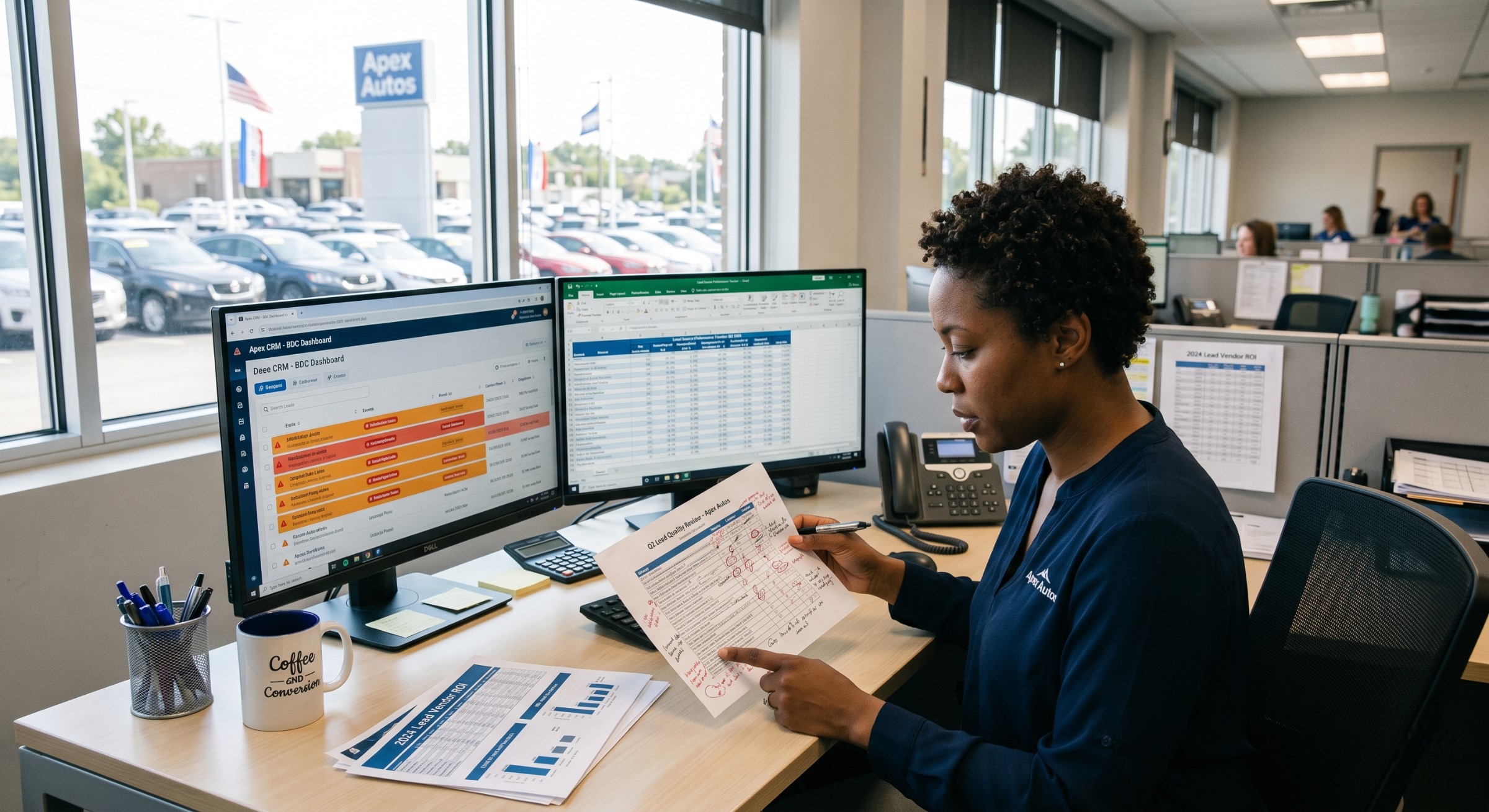
Then.. the BDC starts working them.
Half the phone numbers don’t pick up.
A quarter of the ones that do pick up have no idea what the dealer is calling about.
The income reported on the form turns into something completely different on the call.
Bankruptcy filings the buyer “forgot” to mention.
Repossessions still active.
Vehicles already purchased somewhere else.
By the end of the month the dealer’s done a fraction of the deals the lead volume should have produced, and it’s not because the team is bad.
It’s because the leads were bad..
Knowing how to spot fraud and low-quality leads before you commit budget to a provider is what separates a profitable subprime lead pipeline from one that quietly bleeds money every month.
Here’s what to actually look for.
The two different problems, and why the difference matters
Lead fraud and lead quality issues sound like the same thing, but they’re not, and the fixes are different.
Lead fraud is when someone has actively manipulated the data. Fake names, fake phone numbers, copy-pasted applications, bot submissions, stolen identity submissions. The lead form was filled out by someone who isn’t actually a buyer, or by software, or by a buyer using false information to game whatever offer they thought they were applying for.
Lead quality is when the data is real but the buyer doesn’t fit the deal you’re trying to do. The phone number is real, the buyer is real, but the income is half what they claimed, the credit is worse than the form indicated, the geographic area is outside what your lenders cover, or the buyer is so far below subprime threshold that no lender will approve them.
Both kill your closing rate. The fix for fraud is verification at the source. The fix for quality is targeting and filtering. Knowing which problem you’re dealing with tells you what to ask your lead provider to fix.
The signs you’re getting fraudulent leads
Some patterns show up in fraudulent lead batches that don’t show up in legitimate ones. Tracking these helps you spot a problem before it gets too far.
Disconnect rates above 30 percent. A normal subprime lead pool should produce a disconnect or wrong-number rate somewhere in the 10 to 20 percent range. If you’re seeing 30, 40, 50 percent of phone numbers come back disconnected or invalid, the lead source has serious data quality issues or is selling fabricated leads.
Names that don’t match anything else on the application. Real buyers fill out forms with their real names. Fraud often shows up as obviously fake names paired with otherwise plausible-looking application data. “John Smith” with a specific phone number, address, income, and employer is suspicious in a way that’s hard to articulate but consistent in pattern.
Applications submitted in batches at unusual hours. Real buyer applications spread out across normal waking hours, with peaks at lunch and evenings. If you see clusters of applications submitted at 3 AM in a 15-minute window, those weren’t filled out by real buyers sitting at their kitchen tables. They were submitted by something else.
Geographic mismatches. The buyer claims to live in Texas but their phone area code is from Florida and their email IP traces to a different country entirely. A real buyer occasionally has these mismatches for legitimate reasons. Fraud has them constantly.
Identical employer information across multiple applications. Real applicant pools include diverse employment. Fraud often shows up as the same employer name, same job title, same income, repeating across applications that supposedly come from different buyers in different cities.
Suspiciously round numbers everywhere. Real income is $1,847 a month or $3,612 a month. Fraudulent applications tend to have round numbers all the way through. $2,000 income, $500 down payment, $15,000 vehicle interest. Real buyers don’t fill out forms in even hundreds and thousands.
The signs you’re getting low-quality but real leads
Quality issues look different from fraud. The leads are real buyers, but they’re not buyers who can do business with you. The patterns to watch for.
Income claims that don’t survive verification. The application says $3,000 a month, the buyer on the call says $1,400, the paystubs show $1,100. This isn’t fraud, it’s a buyer who exaggerated to try to get approved. But it tells you the lead source isn’t filtering for verifiable income, which means you’re going to see a lot of this.
Credit ranges that don’t match what the buyer self-reports. The lead form indicates “fair credit, 600 to 660 range.” The buyer on the call mentions a recent bankruptcy and a repossession last year. Their actual credit profile is several tiers below what the form suggested. Lead sources that allow buyers to self-classify without any verification produce this constantly.
Geographic targeting that doesn’t actually match your service area. Your lenders cover a specific set of states or zip codes. The leads are landing all over the country, including places your lender pool can’t help. The lead source advertised geographic targeting but isn’t actually filtering on it.
Buyers who are well outside subprime range in either direction. Some leads come back as buyers who would qualify for prime financing, who are just shopping around. Others come back as buyers so far below any subprime threshold that no specialist lender will touch them. Both waste your team’s time and signal a lead source that isn’t actually targeting subprime specifically.
Buyers who already bought a car. The lead came in two weeks ago, your team is calling now, and the buyer has already purchased somewhere else. Stale leads are a symptom of a lead provider selling the same lead to multiple dealers or sitting on inventory before delivering it.

The verification questions to ask any lead provider
Before signing on with any subprime lead provider, the conversation should cover specific verification practices. Generic answers like “we verify our leads” don’t tell you anything. The right questions get specific.
Do you verify phone numbers in real time? Real-time phone verification catches a huge percentage of fraud and disconnect issues before the lead is delivered. If the provider doesn’t do this, expect higher disconnect rates than they’re advertising.
Do you verify identity against a database before delivery? Some lead providers run identity verification against databases that catch stolen identity fraud, recently deceased identities, and obvious synthetic identities. Providers that don’t do this will deliver fraud at higher rates than ones that do.
Do you verify income against any source? Self-reported income is unreliable in subprime. The best providers do at least some level of income verification, either through bank account verification, employer verification, or third-party income data. If income is purely self-reported, expect significant slippage between application and reality.
How is geographic targeting actually enforced? “We target your area” can mean a lot of things. The right answer is specific zip codes, specific states, specific radius around dealership locations, with verification at submission. Vague answers mean leads will land outside your real service area.
Are leads exclusive or shared? Exclusive leads go to one dealer only. Shared leads go to multiple dealers, sometimes 3 to 5, who all compete for the same buyer. Shared leads convert at significantly lower rates because by the time you call, the buyer has already been called by someone else. The provider should be specific about which model they’re selling.
What’s your replacement policy? Legitimate lead providers have written policies for replacing leads with bad data, fake names, disconnected numbers, or duplicates. Providers that won’t put a replacement policy in writing aren’t standing behind their product.
Tracking the metrics that actually matter
Most dealerships track lead volume and cost per lead, then call it good. Those two numbers don’t tell you anything about quality. The metrics that actually expose fraud and quality problems are different.
Contact rate. The percentage of leads where your team actually reaches a real human at the contact info provided. A healthy subprime lead pool should produce contact rates of 70 percent or higher within a reasonable follow-up window. Anything below 60 percent means significant data quality issues.
Conversation rate. The percentage of contacted leads where the buyer is actually engaged with buying a vehicle, not just confused about why you’re calling. Real subprime leads should produce conversation rates above 80 percent of contacts. Lower than that means buyers don’t know they submitted, which is a fraud signal.
Showed-and-qualified rate. The percentage of contacted, engaged buyers who show up to the dealership and actually qualify for a deal at one of your lenders. This is where quality issues show up most clearly. Buyers who claim income they don’t have, credit they don’t have, or who fall outside your lender pool entirely all bleed out at this stage.
Closing rate. The percentage of leads that turn into closed deals. The full pipeline metric. Healthy subprime operations close in the 6 to 12 percent range depending on the lead source and the operation. Below 4 percent suggests either lead quality issues, operational issues, or both.
Cost per closed deal. Cost per lead times the inverse of your closing rate. This is the only cost metric that actually matters. A $15 lead that closes at 12 percent costs you $125 per deal. A $25 lead that closes at 18 percent costs you $139 per deal. A $5 lead that closes at 1.5 percent costs you $333 per deal. Cheap lead sources with bad quality cost more in the end than premium sources with strong quality.
How to test a new lead source without committing big budget
Most lead providers want long-term commitments and minimum monthly volumes. The right way to evaluate quality is to insist on a small initial test before scaling commitment.
Start with the smallest commitment the provider will accept. 50 to 100 leads is enough to see meaningful patterns. If a provider won’t sell less than 500 leads as a starting point, that’s a signal they’re protecting against being tested honestly.
Track every metric from day one. Don’t just track volume and cost. Track contact rate, conversation rate, qualified rate, and closing rate. Build the dashboard before the leads start flowing.
Compare against your existing baseline. If you’re already running leads from another source, compare the new source against that baseline at every metric. Lead providers will sometimes show better volume but worse quality, which costs you money even if the cost per lead looks better.
Watch the first 30 days carefully. Lead providers sometimes deliver higher quality during the trial window than they do at scale. Track whether quality holds steady through 60 and 90 days as your commitment grows.
Don’t scale until quality is proven. The temptation to commit to more leads after a strong first week is real. Resist it until you’ve seen at least 30 to 60 days of consistent quality across all metrics.
The replacement and credit conversation
What happens when a lead is bad is just as important as how often leads are bad in the first place. The replacement policy tells you whether the provider stands behind their product.
Get the policy in writing. Vague verbal commitments don’t protect you when issues come up at scale. The policy should specify which lead conditions qualify for replacement, the time window for requesting replacement, the documentation required, and how replacements are credited.
Conditions that should qualify for replacement on any legitimate provider include disconnected phone numbers, fake names, leads outside your specified geographic targeting, duplicates within a defined window (usually 90 days), and leads where the buyer denies submitting the application.
Time windows matter. A replacement policy that requires you to flag bad leads within 24 hours of delivery is unrealistic for most BDC operations. The right window is usually 7 to 14 days, which gives your team time to actually attempt contact and identify issues before the window closes.
Replacement should be one-for-one. Some providers offer credits, partial replacements, or replacements only after a certain percentage threshold is hit. The cleanest policy is one-for-one replacement of any qualifying lead, no minimums, no thresholds.
The exclusivity question
Exclusive leads versus shared leads is one of the most consequential pricing distinctions in the lead industry, and it’s worth understanding clearly.
Shared leads cost less per lead because the provider sells the same lead to multiple dealers. The buyer fills out one form, the provider sells the lead to 3 to 5 dealers, and all of those dealers call the same buyer. Whoever calls first usually wins the conversation. The other dealers paid for a lead they’re never going to close.
Exclusive leads cost more per lead but they go to one dealer only. You’re not racing 4 other dealers to the buyer’s phone. The buyer gets one call from one dealer with full attention, and your closing rate reflects that.
Most well-run subprime operations find that exclusive leads produce a lower cost per closed deal even at higher cost per lead, because the closing rate difference more than makes up the price difference. Operations that buy shared leads almost always struggle with closing rates that look bad because the leads themselves are working against them.
Make sure you know which model you’re buying. Some providers blur the line, calling leads “exclusive” when they actually mean “exclusive within your zip code” or “exclusive for 24 hours.” True exclusivity means the lead is yours alone, period.
The bottom line
Lead fraud and low-quality applications are common enough in the subprime lead industry that most dealerships have been burned at least once. The dealerships that don’t keep getting burned are the ones that built systematic processes for evaluating providers, tracking real quality metrics, and walking away from sources that don’t perform.
The cheapest lead per unit is rarely the cheapest cost per closed deal. The right lead source for your operation is the one that delivers verified, exclusive, geographically targeted leads from buyers who actually fit your lender pool, with a real replacement policy and transparent quality metrics. That sourcing approach costs more per lead and saves money per deal.
If your current operation is closing in single digits and you suspect lead quality is part of the problem, it probably is. Pull the metrics, run the math, and either fix the provider or change providers. The numbers tell the story clearly once you actually look at them.
How Autocarleads supports lead quality at the source
The lead quality conversation gets easier when the leads themselves come in with the right verification already done.
Every subprime auto lead from Autocarleads is intent-verified, contact-validated, and matched to your geographic market. Verified income of at least $1,800 monthly means leads that don’t meet that threshold get replaced rather than delivered, so your team isn’t burning calls on buyers who’d be declined by any subprime lender on income alone.
All leads are 100 percent exclusive to your dealership. Not shared with other dealers, not resold within a window, not “exclusive in your zip code.” Exclusive means exclusive. Your team isn’t racing other dealers to the buyer’s phone.
Real-time CRM delivery means your team gets to buyers within minutes of submission, while engagement is at its peak. The replacement policy is in writing and covers fake names, disconnected numbers, leads outside specified targeting, and duplicates within a 90-day window.
See what subprime lead options are available in your market and how the verification works.
Frequently Asked Questions
What's a normal contact rate for subprime auto leads?
A healthy subprime lead source should produce contact rates of 70 percent or higher within the first few follow-up attempts. Below 60 percent suggests significant data quality issues, either fraud or stale leads. Below 50 percent is a serious problem that justifies switching providers. Tracking contact rate weekly and comparing across sources is one of the fastest ways to identify quality differences between lead vendors.
How do I tell if my current lead provider is selling shared leads they claim are exclusive?
The most common way to find out is asking the buyer directly during the qualifying call. “Did anyone else call you about a car loan after you submitted?” Buyers are usually willing to answer honestly. If multiple dealers are calling them about the same form, the leads aren’t exclusive regardless of what the contract says. You can also look at conversation patterns, buyers who seem confused or frustrated by the call often get called by other dealers first.
Are bot-submitted lead applications a real problem?
Yes, more than most dealers realize. Both submissions are designed to look like real leads, with plausible names, real-looking phone numbers, and reasonable income claims, but they’re generated by software rather than real buyers. Real-time phone verification at the lead source catches most bot submissions. Lead providers that don’t do this will deliver bot fraud at higher rates than ones that do, and your team will burn calls on leads that were never going to convert.
What replacement rate should I expect from a quality lead provider?
Legitimate replacement rates on a quality provider usually run between 5 and 12 percent of total volume, depending on how strict the replacement criteria are. Below 3 percent suggests the provider isn’t actually replacing leads they should. Above 15 percent suggests the underlying lead quality is poor enough that even a good replacement policy can’t fix it. Tracking your replacement rate against the provider’s stated standards is a good check on whether the policy is being applied honestly.
Should I tell my lead provider I'm tracking specific quality metrics?
Yes, and most legitimate providers respond well to this. Lead providers that are confident in their product appreciate working with dealers who track real metrics, because it lets them prove their value beyond just volume claims. Providers who get defensive or vague when you bring up specific quality metrics are usually hiding quality problems. Asking the question is itself a useful filter for identifying which providers are worth working with long-term.