

Autocarleads

How to Filter Auto Loan Leads by Credit Score & Geography

How to Filter Auto Loan Leads by Credit Score & Geography

Autocarleads | Updated April 2026 | 6 min read

Buying auto loan leads without filtering them is like casting a net in the ocean and hoping you catch the right fish.

You’ll get volume. You won’t necessarily get the right buyers.

Filtering your leads by credit score and geography changes the whole equation. Instead of working through a list and hoping something converts, you’re starting every conversation with a buyer who actually fits what you can offer and who lives close enough to do something about it.

This article explains how lead filtering works, why it matters, and how to set it up so your team is spending time on leads that are worth working.

Why Filtering Matters More Than Most Dealers Realize

Most dealerships focus on lead volume. How many leads did we get this week? How much did we spend?

The better question is how many of those leads were actually a fit for us?

A subprime lender calling a buyer with excellent credit is wasting both parties’ time. A dealership in Phoenix working a lead from someone in Philadelphia is going nowhere regardless of how good the follow-up is.

Filtering isn’t about getting fewer leads. It’s about getting the right ones. A smaller list of well-matched buyers will almost always outperform a larger list of mismatched contacts.

Filtering by Credit Score

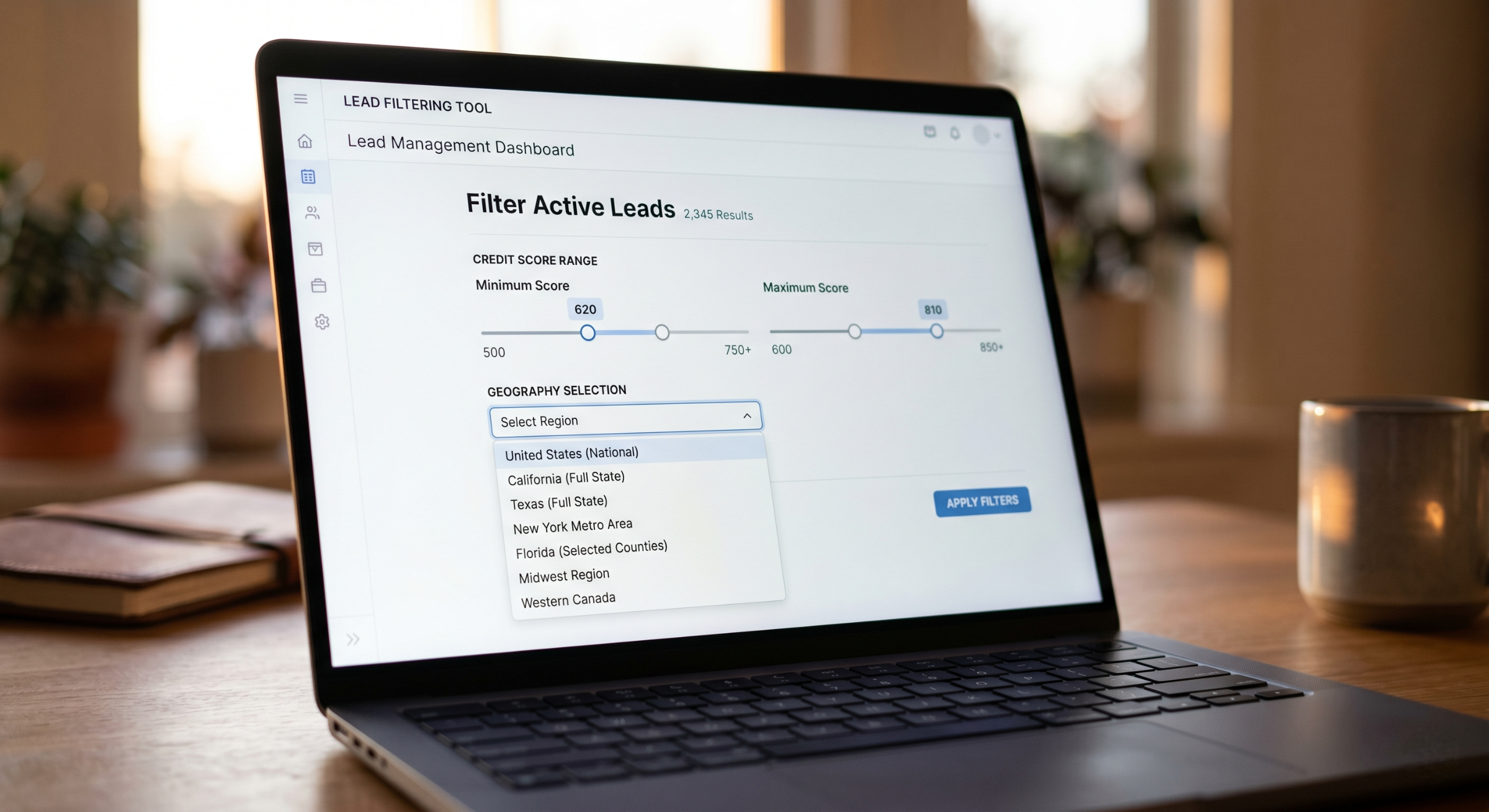
Credit score filtering lets you receive leads that match the type of financing your dealership or lending product is set up to handle.

Here’s why that matters in practice.

If your financing products are designed for standard credit buyers, sending your team after subprime leads means a lot of declined applications and frustrated conversations. If you specialize in subprime, standard credit leads are likely to find better terms elsewhere and you’ve spent time and money on a buyer you can’t actually serve well.

Matching the lead to your product makes the first conversation more productive for everyone involved.

How credit score filtering typically works

Most lead providers let you set a credit range when you place your order. Common brackets look something like this.

Super prime buyers tend to sit above 720. Prime buyers generally fall between 660 and 720. Near prime runs from roughly 600 to 660. Subprime sits below 600.

The exact brackets vary by provider. What matters is that you know which range your financing products serve best and that you’re buying leads within that range rather than across the board.

What to ask your lead provider

Before you commit to a credit-filtered lead package, get clear on a few things. How is the credit range determined? Is it based on a hard pull, a soft pull, or self-reported information from the buyer? Self-reported credit ranges are less reliable than verified data. A buyer who thinks they have good credit and a buyer who has had their credit verified are not the same lead.

Working with a lead provider that verifies credit range before delivery makes a meaningful difference to your conversion rate on filtered leads.
Filtering by Geography

Geographic filtering makes sure you’re only receiving leads from buyers who are actually in your market.

This sounds obvious. But a surprising number of dealerships buy broad regional leads and then wonder why so many of them never convert into floor visits. A buyer three hours away is not your customer regardless of how well the phone call goes.

Why geography affects conversion more than people expect

Auto purchases are still largely local transactions. Most buyers want to see the vehicle, test drive it, and handle the paperwork in person. Even buyers who do extensive online research typically end up at a dealership within a reasonable driving distance from their home.

A lead from someone in your metro area has a real path to becoming a deal. A lead from someone two states away almost certainly doesn’t.

How geographic filtering works

Most providers let you filter by zip code radius, county, city, or state depending on how granular you want to get.

A zip code radius filter is usually the most useful for dealerships. Setting a 25, 50, or 75 mile radius around your location gives you a realistic pool of buyers who could reasonably visit your lot.

State-level filtering is useful for lenders who operate statewide or for finance teams that can handle remote applications without requiring an in-person visit.

The right geographic scope depends on your business model. A buy here pay here dealership serving a specific neighborhood needs tighter filtering than a lender operating across multiple states. Know your actual service area before you set your filters.

Combining Credit and Geography Filters

The real power comes from using both filters together.

A subprime buyer in your zip code is a very different lead from a subprime buyer in another state. A prime buyer nearby who fits your product is about as good as a lead gets.

When you layer credit and geography filtering together, you’re not just narrowing the list. You’re building a list where almost every contact is someone your team has a genuine reason to call and a real ability to help.

That changes how your team approaches the work. Calling a list of well-matched local buyers feels different from working through a broad mix of contacts that may or may not convert. The conversations are more confident, more targeted, and more likely to go somewhere.

Filtering auto loan leads by both credit score and geography is the single most effective way to improve your conversion rate without increasing your lead spend.

Common Filtering Mistakes to Avoid

Filtering too narrowly. Setting an extremely tight credit range or a very small geographic radius can starve your pipeline. If you’re not getting enough leads to keep your team busy, widen the filters slightly rather than abandoning the approach.

Filtering based on assumptions rather than data. If you haven’t tracked which credit ranges and geographic areas produce your best closing rates, you’re guessing at your filters. Run the numbers on your existing leads first and let the data guide your filter settings.

Setting filters once and never revisiting them. Your market changes. Your product mix changes. Your team capacity changes. Revisit your filter settings quarterly and adjust based on what’s actually converting.

Ignoring the quality of how the credit range was determined. A filter that puts buyers into credit brackets based on self-reported information is less reliable than one based on verified data. Ask your provider how they determine credit range before you build your strategy around it.

How to Set Up Your Lead Filters for Maximum ROI

Start by answering three questions before you touch any filter settings.

What credit profile does my financing product actually serve best? Be honest about this. The answer should come from your lender guidelines, not from wishful thinking about who you’d like to reach.

What geographic area can my team realistically convert into deals? Think about driving distance from your location and whether your process requires an in-person visit or can be handled remotely.

What volume of leads can my team actually work properly? Filtering is partly about quality but it’s also about matching lead volume to team capacity. A smaller, well-filtered list that gets worked thoroughly beats a large list that gets partial attention.

Once you have clear answers to those three questions, your filter settings almost write themselves.

How Autocarleads Handles Filtering

Autocarleeads lets dealerships and finance teams filter leads by credit range and geographic area before delivery.

Every lead is pre-screened and intent-verified before it reaches your team. When you add credit and geography filters on top of that, you’re starting with a buyer who has genuine financing intent, fits your product, and lives in your market.

See what filtered lead options are available in your area.

Frequently Asked Questions

How specific can I get with geographic filtering on auto loan leads?

Most providers offer filtering down to zip code level at minimum. Some offer radius-based filtering where you set a distance from a specific location. The right level of granularity depends on your business model. A dealership serving a specific metro area typically benefits from zip code radius filtering. A statewide lender may find state-level filtering sufficient.

Self-reported credit ranges are less reliable than verified data. Buyers often misjudge their own credit score by a significant margin in either direction. If your lead provider is using self-reported credit information to bucket leads into ranges, factor that uncertainty into your expectations. Providers who verify credit range through a soft pull before delivery offer more accurate filtering.

This depends on your provider’s policies. Most reputable providers have a replacement or credit policy for leads that fall significantly outside the agreed parameters. Ask about this before you buy. Understanding how disputes are handled tells you a lot about how much a provider stands behind the quality of what they’re selling.

Exclusive leads warrant tighter filtering because you’re paying more per lead and the economics require a higher conversion rate to justify the cost. With shared leads, slightly broader filters can make sense because the lower cost per lead gives you more room to absorb contacts that don’t convert. The key is that your filter settings should always reflect your actual product fit and geographic service area rather than just what sounds good on paper.

At minimum quarterly. More frequently if you’re seeing significant changes in your conversion rate or if your product mix or service area has changed. Track your conversion rate by credit range and geography separately so you can see clearly which combinations are producing results and which aren’t. That data should drive your filter adjustments.