

TL;DR — Quick Summary
- Subprime auto leads produce higher front-end and back-end gross profit per deal than prime leads, because lender fees, dealer participation, and F&I product penetration are all elevated in the subprime segment.
- Prime buyers are comparison-shopping on rate and often arrive with pre-approvals — leaving little margin for F&I teams to work with.
- Subprime buyers depend on the dealership’s financing expertise, which increases F&I product attachment rates and dealer participation income.
- The key variable is lead quality — low-quality subprime leads waste BDC time and inflate cost per acquisition; pre-screened, income-verified leads are what actually convert at 6–15%.
- Autocarleads supplies Canadian dealerships with exclusive, pre-screened subprime auto leads that are income-verified before delivery — so your team works deals, not dead ends.
Most dealer principals assume prime buyers are the better business. They have strong credit, fast approvals, and a smooth path through F&I. But month after month, the dealerships posting the highest per-unit gross profit aren’t the ones chasing tier-one buyers — they’re the ones who figured out how to work the subprime segment properly.
Subprime auto leads carry more gross per deal. Front-end, back-end, and F&I — the numbers compound in the dealer’s favour when the buyer has challenged credit and limited financing options. The problem isn’t the segment; it’s sourcing leads that actually convert.
Here’s a full breakdown of why subprime outperforms prime on profit — and what separates a high-converting subprime pipeline from an expensive one.
AUTOCARLEADS
Is Your Subprime Pipeline Leaving Money on the Table?
Most dealers know subprime pays better — but few have a consistent pipeline of pre-screened, income-verified applicants to actually work. Book a free call to see how Autocarleads fills that gap in your territory.
Why Prime Buyers Are Lower-Margin Deals
Prime buyers close faster but generate less gross per deal because they arrive with leverage — pre-approvals from their bank or credit union, knowledge of current rates, and the willingness to walk if the terms aren’t competitive. That leverage compresses every margin point your F&I team would otherwise capture.
Dealer participation — the spread between the buy rate a lender offers and the rate the dealer charges the buyer — is tightly capped in prime financing. Tier-one lenders restrict participation to protect their own relationships with prime borrowers, and buyers with 750+ scores know exactly when they’re being marked up. Most won’t accept it.
F&I product attachment is also lower with prime buyers. Extended warranties, GAP coverage, and credit insurance are all harder to sell to a buyer who’s financing at 4.9% through their personal bank account. The deal is clean, fast — and thin.
Where Subprime Auto Leads Generate More Gross
Subprime deals pay better at every stage of the transaction. A buyer with a 580 credit score can’t comparison-shop their rate the same way a 760-score buyer can — which puts the dealership’s financing expertise at the centre of the deal.
Front-end gross is often protected because subprime buyers are selecting vehicles based on monthly payment and approval — not on beating invoice price. A buyer who’s been declined twice elsewhere isn’t negotiating the same way a prime buyer with a competing offer is.
Back-end gross through dealer participation is meaningfully higher. Alternative lenders — the ones approving subprime buyers — allow wider rate spreads than prime banks. A well-structured subprime deal through a lender like Westlake Financial, iA Auto Finance, or Carfinco can carry $1,200–$2,500+ in backend participation alone, compared to $200–$600 on a comparable prime deal.
F&I product penetration is also substantially higher. Subprime buyers need the protection products — GAP coverage in particular matters when a buyer is financing a 2019 Civic at 13.9% and is immediately upside-down. An experienced F&I manager working a subprime deal can realistically add $800–$1,500 in back-end product revenue that simply isn’t attainable on a lean prime transaction.
“Dealerships working structured subprime pipelines consistently report total gross per deal 40–60% higher than equivalent prime transactions — driven by participation income, F&I attachment, and protected front-end margins.”
The Hidden Cost of Unscreened Subprime Leads
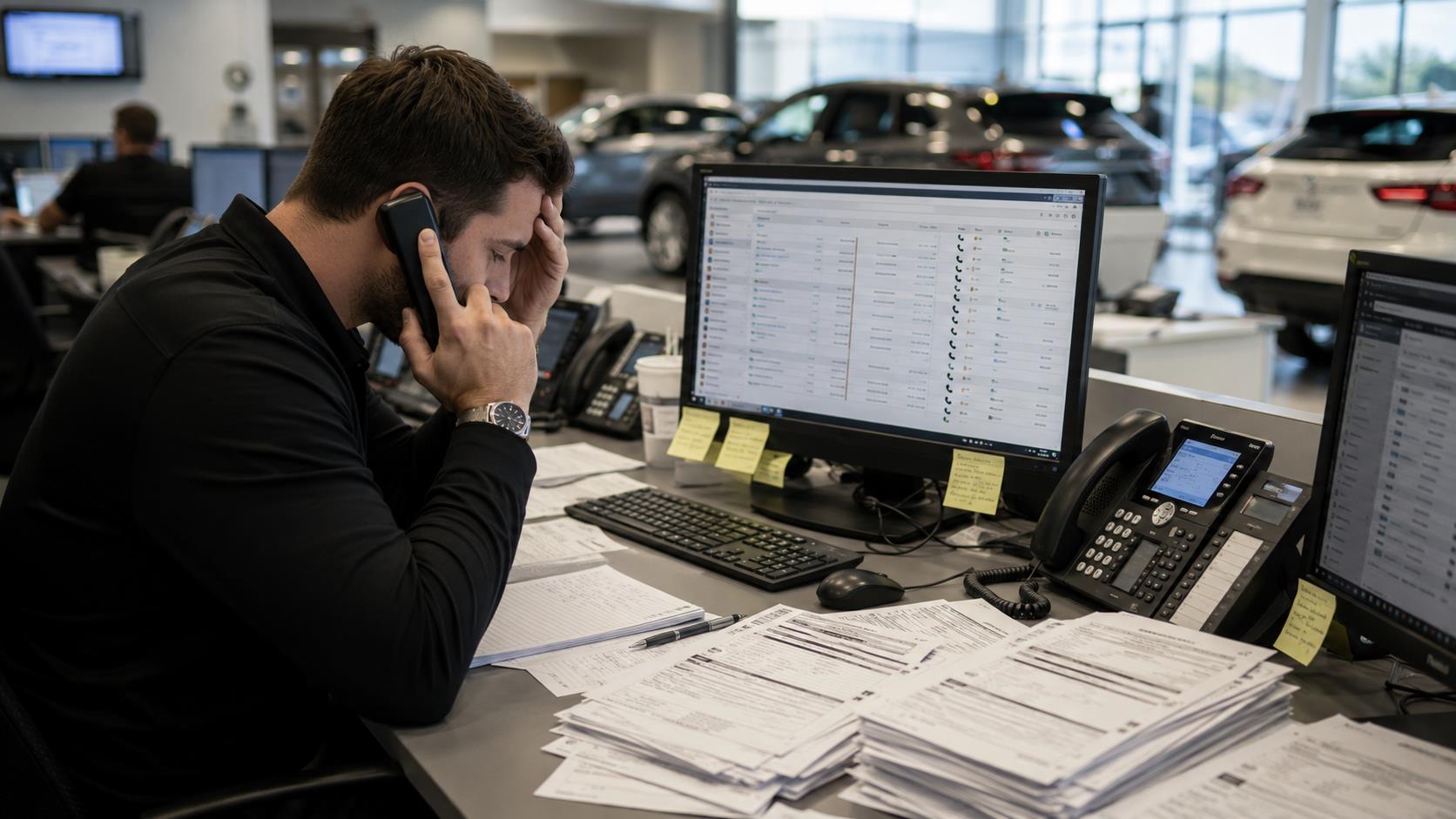
The subprime segment is only more profitable when the leads are worth working. Unscreened, recycled, or shared leads — the kind sold by aggregator platforms to five dealerships simultaneously — eat into your BDC capacity and inflate cost per acquisition to the point where the gross advantage disappears.
The core issue is contact rate. A subprime applicant who’s already been called by three competing dealers within 24 hours is unlikely to engage meaningfully with a fourth. Your team is doing real work — and burning real time — on a lead that’s already decided elsewhere.
⚠️ Shared Lead Warning: When a subprime lead is sold to multiple dealerships, the first caller wins — and everyone else absorbs the acquisition cost with zero return. Shared lead platforms routinely sell the same applicant to 3–5 dealers. If your BDC isn’t first in queue, your conversion rate collapses regardless of how well your team handles the call.
This is why exclusive auto finance leads and shared leads are functionally different products. Exclusivity isn’t a premium feature — it’s what makes the economics of subprime lead generation actually work.
AUTOCARLEADS
Canadian Dealerships Close 6–15% of Autocarleads Subprime Leads.
Every lead Autocarleads delivers is 100% exclusive — yours alone, never resold. Applicants are income-verified at a minimum of $1,800/month before reaching your BDC, and AI-powered SMS follow-up fires within 5 minutes of delivery. Your team works pre-screened buyers who are ready to move forward.
What Makes a Subprime Lead Worth Buying
Not all subprime car loan leads are equal. The difference between a 10% close rate and a 2% close rate almost always traces back to three variables: exclusivity, income verification, and speed-to-contact.
- Exclusivity: The applicant has submitted to one dealership, not a network. Your BDC isn’t racing five competitors to the same phone number.
- Income verification: A pre-screened lead has already confirmed $1,800+/month in verifiable income — a basic lender threshold. Unverified leads waste approval attempts.
- Speed-to-contact: Research consistently shows that leads contacted within 5 minutes of submission connect at 9× the rate of those contacted 30 minutes later. Automation bridges the gap between delivery and first outreach.
Understanding what separates a high-quality auto finance lead from a recycled application is the single most important lever a dealer principal can pull when evaluating their lead spend.
How Canadian Dealerships Build a Profitable Subprime Pipeline
Dealerships in Ontario, Alberta, and British Columbia running consistent subprime volume share a few operational patterns: they have a dedicated F&I process for credit-challenged buyers, they use lenders with flexible underwriting (not just their prime bank), and they maintain a steady inbound lead flow that doesn’t depend on walk-in traffic or outbound cold calling.
Volume is the other piece. A BDC team working 50–60 subprime leads per month at a 10% close rate delivers 5–6 funded deals. At $3,000–$4,500 total gross per subprime deal (front-end + participation + F&I), that’s $15,000–$27,000 in incremental monthly gross from one lead source — without touching their prime business at all.
The ROI math on subprime auto leads holds up when the lead cost is reasonable and the close rate stays above 6%. Below that threshold, the economics tighten — which is why lead quality and BDC follow-up speed matter more in this segment than in any other.
“Autocarleads has processed 180,000+ applications across 150+ Canadian dealerships. Conversion rates on exclusive, pre-screened subprime leads consistently run between 6% and 15% — well above industry norms for shared-lead products.”
Frequently Asked Questions
Do subprime auto leads really pay more per deal than prime leads?
Yes — subprime auto leads consistently generate higher total gross per funded deal than prime leads. The difference comes from three sources: protected front-end margins (subprime buyers aren’t negotiating from a competing pre-approval), higher dealer participation spreads allowed by alternative lenders, and stronger F&I product attachment rates. Combined, these factors routinely produce 40–60% more gross per unit compared to prime transactions at the same vehicle price point.
What is the typical close rate on subprime auto leads?
Close rates on subprime auto leads vary significantly by lead quality. Shared, recycled, or unverified leads typically close at 1–3% due to low contact rates and motivated buyers who’ve already committed elsewhere. Exclusive, pre-screened leads from providers like Autocarleads close at 6–15% across Canadian dealerships — because the applicant is income-verified, hasn’t been contacted by competitors, and receives follow-up within minutes of submission.
Why do F&I managers earn more on subprime deals?
F&I managers earn more on subprime deals because product attachment rates are higher and the products are genuinely relevant to the buyer’s situation. A subprime buyer financing at 12–16% is immediately negative-equity — which makes GAP coverage a practical necessity, not an upsell. Extended warranties and credit insurance also attach at higher rates because subprime buyers are more exposed to financial risk and less likely to decline coverage they understand they need.
What income level do subprime auto lead buyers typically have?
Most alternative lenders approving subprime buyers require a minimum verifiable income of $1,500–$2,000 per month, depending on the lender and province. Autocarleads pre-screens all applicants at a minimum of $1,800/month before delivery — meaning dealerships receive leads who already meet baseline lender qualification criteria, reducing the rate of declined submissions and wasted finance manager time.
How quickly should a dealership contact a subprime lead after delivery?
Subprime leads should be contacted within 5 minutes of delivery. Research on speed-to-lead in auto finance shows that contact probability drops by more than 80% when the first call comes 30 minutes or later after submission. Autocarleads triggers AI-powered SMS follow-up within 5 minutes of each lead delivery so the applicant is engaged before a competitor has the chance — even on exclusive leads.
Does Autocarleads supply subprime leads across all Canadian provinces?
Yes — Autocarleads supplies subprime auto leads to dealerships across all Canadian provinces, including Ontario, Alberta, British Columbia, Quebec, and Manitoba. Leads are geo-targeted to the dealership’s specific service territory, so you’re only receiving applicants who can realistically reach your lot or complete the transaction online. Territory availability varies by region; Canadian market coverage details and current openings are confirmed during a free intake call.
Ready to Turn Subprime Leads Into Your Highest-Gross Segment?
Autocarleads connects Canadian dealerships with exclusive, pre-screened car loan leads — including subprime buyers — delivered in real time with AI-powered SMS follow-up. Every applicant is income-verified before they reach your team.
- ✅ 100% exclusive leads — never shared
- ✅ Lead buyback guarantee
- ✅ No long-term contracts
- ✅ Geo-targeted to your territory
📍 Address: Serving dealerships across all Canadian provinces
📞 Phone: +1-888-510-0264
🌐 Website: Schedule your free consultation at autocarleads.ca
Selling cars is hard enough. Let Autocarleads bring the buyers to you.